Monday, November 09, 2020
Books #44, #45, #46. #47, #48 #49, and #50 of 2020: The Three-Body Problem by Liu Cixin, Egyptian Myths and Mysteries by Rudolph Steiner, Parable of the Sower by Octavia E. Butler, In the Sanctuary of the Soul by Paramahansa Yogananda, Funeral Games by Mary Renault, Twelve Against the Gods by William Bolitho, and Heart of the Heart of the Country by William Gass


Saturday, September 26, 2020
Books #36-43 of 2020
I fell behind a little bit. The start of teaching is always overwhelming, and the commencement of a school year online was moreso. Finding time to be online for pleasure or personal musings is difficult when you end the work day with achy half-blind eyes from staring at a screen 12 hours. But, I am catching up here on some recent reads.
I discovered Renault by reading a collection of essays by Daniel Mendolsohn, an editor and contributer to the NYRB who corresponded with Renault as a teen. This is the 3rd of her wonderful novels about ancient Greece I've had the pleasure to read this year as a result. She had a remarkable gift for inhabiting and re-imagining this past and its characters. I'd rank her with Graves, Williams, and Vidal easily, and she might best them all. What she can't learn via astute scholarship she infers and weaves seamlessly into the known.
Alexander as a youth had to navigate between the machinations of his mother Olympias--a princess from Epirus, regarded by the Macedonians as a backward and feral tribe much the way the Macedonians were regarded as such by Athenians--and Philip, his scheming and systematically ambitious father. Olympias consults oracles and sacrifices in her role as a cultist of Dionysus, while Philip conquers just about everyone and bit by bit advances toward his dream of bringing all of Greece under his empire and then moving East. Olympias and Philip are in constant struggle with each other, often to Alexander's dismay, but also to his benefit later in life. What he learns about power and influence in this household makes him the commander and gifted politician he later became. Renault's gift is showing it all, rather than telling.
The writing is beautiful, the characters are alive, and Macedon at the approach of its apex is fascinating. But the most lovely thing about the novel is Alexander's relationship to Hephaestion. From childhood pals to teenage lovers and into adulthood, there are few relationships drawn with so much tenderness and sympathy out of the hundreds I've read. We also get to meet Peritas and Bucephalus along the way.
The second volume of Renault's novels about Alexander is told from the viewpoint of his Persian eunuch and lover Bagoas. The first chunk of the narrative is Bagoas's own, and we witness the sad fate of his family and his capture. His decline from prince in an aristocratic Persian house to eunuch in another's is rendered with nigh unbearable sympathy by Renault. One can't help but root for Bagoas as he rises through the ranks of eunuchs kept for pleasure by wealthy men until at last he winds up as the favorite of Darius, King of Persia.
Of course along the way there are rumors about the barbarian Alexander, who has taken charge of armies following the assasintation of Philip, and is marching eastward. Bagoas is rightfully terrified about what awaits him if Darius is defeated and Persian conquered, and in this finely wrought and delicious novel we see indeed what occurs. After the fall of Darius Bagoas ends up in Alexander's service, and then in his bed. Renault deftly re-imagines the perspective of a Persian in the barbarian culture, and his surprise at Alexander's humanity and compassion and erudition. Bagoas as a long-time keen observer of intrigues at Persian courts becomes an invaluable advisor to Alexander, competing with Hephaestion for his love and attention, and through Bagoas's point of view we see many of Alexander's substantial victories, his illnesses and injuries, his close calls, and eventually his demise. A fantastic historical novel, easily one of the best I've read, and it surpasses even its glorious predecessor.
Not nearly as interesting nor as entertaining as the first volume (The Shadow of the Wind). Kind of a rehash of the same plot elements but the execution and the characters are a bit less engaging. But had just enough momentum to pull me through to the end and to interest me in continuing the tetralogy.
These stories are top-notch Borgesian journeys into the outer reaches of creativity and imagination. Delightful and disturbing by even measure, I expect her to out-do Kafka and Calvino. This is truly a young author to marvel over. I want to learn more Spanish and read her novels in the original.
And speaking of learning more Spanish in order to read the original--this is another young writer with tremendous gifts. Mexican Gothic is a Lovecraftian tour-de-force. An isolated European family inhabits a grim manse deep in the Mexican wilderness. The residents of a nearby town whisper about the manse and its inhabitants, and with good reason. They have created a monstrous fungi cult and are transforming their patriarch into an unspeakable horror from beyond time and space. Though Lovecraft seeps through this work (I see that Sylvia Morena-Garcia has edited a Cthulu-themed collection of mythos in the HPL universe), her main influence in English is likely Shirley Jackson, whose Hill House also permeates this creepy book. You can, and likely will, polish it off in an afternoon.
Sergio Argones has a mad and unrestrained imagination both as scribbler and as story-teller. I used to get MAD Magazine as a kid and the first thing I would do was look at all the marginal scribbles Argones had doodled in and around the panels of others' work. Groo was funny to my middle-school self, and still gives me chortles as that middle-school self fades more and more into the deep recesses of time.
Learn the language of these symbols. Dig their resonance with the subconscious. Let them awaken the eternal within you. Hand over the reins to the Universal and escape the cycle of samsara. And confront about 1,000 typos, mis-spelled words, and sentence fragments along the way.
I'm a long-time fan of Lewis Lapham. I used to lap up Lapham's intros to Harper's Mag, and when he stepped down from that post and moved over to Lapham's Quarterly I eagerly followed along. I bought this book from a recent list of books Lapham regarded as most influential. Reading Durant I can see stylistically and philosophically his influence on Lapham. This collection of essays on major themes in the study of history provided many useful gems for further discovery, and each topic could serve as provocation pieces for inquiry units in Humanities courses. Humane, erudite, and with an unparalleled grasp of world history, Durant might indeed take a large chunk of my remaining reading time here on Earth.
Tuesday, July 28, 2020
Book #35 of 2020: The Aryan Christ by Richard Noll
Does nothing to diminish Jung's work or his contributions as a major 20th century intellectual. Most of what Noll decries about Jung, such as his focus on myth and spirituality, is pretty obvious to anyone who reads Jung or knows about Jungian analysis, and is hardly 'the secret life' of Jung.
Yes, Jung found science and medicine to be only part of the picture (like most literary and philosophical thinkers and mystics of all ages), and thought there was more at work which was inexplicable. Yes, he dabbled in the occult and spirituality and religion and astrology. He wrote openly about these things in his own works. So using a focus on myth or spiritualism or pseudo-science in an attempt to tarnish Jung simply backfires. And the fact that Jung's estate kept unsavory things about his affairs out of published works does not indicate Jung was a sinister monster--this is pretty standard practice and is true of most literary estates.
Noll attempts to paint Jung's obsession and interest in hauntings and spirits as evidence he was founding a new religion and not a method of analysis. But Jung was open his entire career about his interest in hauntings and spirits, and the much-publicized break with Freud was partly a result of this. This is not "the secret life" of Jung at all. And sure, maybe there is a New Age-y air to Jungian analysis and to the Joe Campbell school of Lit Crit which sprung from Jung's influence on academe. But does any of that diminish Jung's work? Throughout this book Noll routinely praises Jung's accomplishments in the field and mentions how they are still in use or relevant to the field of psychology. I recently read a dialogue about the release of Jung's Red Book which focused anew on this debate in the light of Jung's illuminated manuscript and what it portends for the future of analytical psychology as a science.
Maybe the point, Mr. Noll, is that anyone who regards psychology as a science is wrong. Perhaps that's what bugs you? Psychology is like economics--it gives you some outlines and some ability to explain, but it's mostly a system of belief. So what?
There is a lot of "ooh, here's a sentence in a letter about Jung with the word cult in it. See Jung WAS the leader of a cult!" But the worst most egregious thing about this book is the final chapter which attempts to paint Jung as a Nazi sympathizer and anti-Semite. Throughout the entire book is a continual building of this case, that Jung's ideas about polygamy and German myth and sun-worship and paganism were the same soil out of which Nazism sprung, so therefore Jung is a Nazi and a terrible human as well. The entire last chapter can be summed up in these short passage:
Gene Nameche, to his credit, specifically asked almost all of his interviewees who knew Jung in the 1930s and 1940s about his attitude toward Jews and National Socialism and his possible involvement with the Nazis. The vast majority of [Jung's] disciples absolve him of this. Others equivocate. The truth is no doubt somewhere in between.
Notice the 'logic' of this sequence. Almost everyone said Jung was not Anti-Semitic or Nazi, some don't come out and say it...so the truth is between. What nonsense! The next paragraph goes on to talk about Jung's interest in solar worship and myths associated with the sun, and the swastika was a solar symbol so JUNG MUST BE A NAZI.
Followed by this: "there is no evidence that he was ever a Nazi. This is not to say he opposed the Nazis, either."
Much of the book is sloppy and flip-floppy guilt by association of this nature. BUT--I enjoyed the portraits of some of Jung's 'disciples' and the critique of his cynical use of a niece as a spiritual medium was interesting. Particularly interesting and sensitive are the portraits of Fanny Katz, Edith Rockefeller McCormick, and Constance Long. Noll intends the stories of these women to damn Jung and his 'cult,' but on the contrary they show that Jung was a major part of the intellectual scene at the time, and some drifted in and out of his circle much as is the case with any artist or intellectual of note in a vibrant culture of ideas.
I think this book is worth a read. As an admirer of Jung as a scientist turned mystic and what he attempted I have my biases. The book was insufficiently well-argued to overcome them and I am not convinced by Noll's arguments or evidence. I imagine for someone with anti-Jung biases that the opposite might be the case.
Wednesday, July 22, 2020
Book #34 of 2020: Fifth Sun by Camilla Townsend
I learned a lot about Mexico City and the Aztecs and the era stretching from immediately before the arrival of Cortes until a couple generations after his death. The book relies heavily on the histories of Aztecs/Nahuas/Mexica people, rather than solely on European sources. As a result, one gets a fuller picture of the religion, myths, and complex politics of the region before and after colonization.
I found it tremendously readable and though it was a challenge to keep track of the various lines of royal clans the characters of each leader and the cultures in competition were vividly portrayed. The book seeks to address centuries of one-sided and blinkered history, but is not judgmental. The Spaniards and their motives are put into context just as are the competing factions in the Mexican basin and their wants and needs, and the complex alignments and treaties and navigations before and after Moctezuma/Cortes are truly interesting.
Malintzin--what an amazing and evocative figure! Why is she ignored? Her story and impact are quite important in the establishment of modern Latin American cultures and politics. And Paquiquino--Don Luis de Velasco? An amazing and interesting character, taken from the Chesapeake as a hostage to Spain and thence to Mexico City, a relative of Powhatan. And the sons of Cortes--all very interesting characters. As much as I loved the initial section of the book for its portrait of the indigenous American cultures before Cortes, I think the most interesting stuff came a generation after Cortes, with the blending of Spanish and Nahuas and Mexica peoples and the arrival of enslaved workers from Africa and Asia and the indigenous historians working hard to ensure their stories were not lost by recording them in codices. Brilliant and innovative history which shatters conventional understandings based in propaganda and deepens one's understanding of this important time.
Book #33 of 2020: The Shadow of the Wind by Carlos Ruiz Zafon
A pure delight. A book about books and loving books obsessively, to the point where you track down a mysterious author of a novel and enter into an awful Gordian knot of conspiracies and vendettas but you still keep going because you need to know and then at the end you know and you don't want it be over. But it's not, because: TETRALOGY!
The setting for this marvel is Civil War era Barcelona. Everything about it is delicious. Wish I had know about these novels while Zafon was still alive, but I found about his Cemetery of Books books too late for that, alas. I shall read them all!
Friday, July 10, 2020
Book #32 of 2020: Songs of a Dead Dreamer and Grimscribe by Thomas Ligotti
An entertaining collection of horror stories by a modern master--well, actually 2 collections combined. The first half are straight-edged horror with the veneer of mid-twentieth century realism. Many of the stories in the 2nd half of the volume share a Lovecraftian tinge: an ancient evil or some mysterious force intrudes into dreams, or is awakened by someone carelessly plodding around old antique shops or leafing through an incomprehensible grimoire, or a city academic visits a rural area and finds out the locals have ignorantly stumbled upon ancient rites and reinvited some previously expelled or entrapped cosmic entity. In lesser hands, these tropes and plots could be stale, but Ligotti infuses them with a Borgesian sublimity, blending in a hint of Kafka now and again. And there is also a demonic scarecrow.
The Frolic, which opens the collection, is a true banger and absolutely merciless. You know what is going to happen early on and yet the ending is not spoiled because Ligotti masterfully yanks your tension strings to satiety. The Last Feast of Harlequin is an updated "The Lottery" spun through Lovecraft and back again via Umberto Eco. There are a few tales which rely heavily on Poe, where a rather unreliable narrator brings us along as he sets about trapping his next victim a la "The Cask of Amontillado." There's a nice fantasy story set in Renaissance Venice to boot, and an excellent little vampire story.
If you like slasher stuff, or monster tales, or overt supernatural stuff with clear-cut hauntings--these stories are likely not for you. They are typically more elegant and subtle than visceral and shocking. But if you are a student of the genre and like to think while being creeped out, if you value mood and tone as much or perhaps more than plot and character, and if you like a writer who can churn out exceptional sentences--give these tales a try!
Book #31 of 2020: A History of Ancient Rome by Frances Titchener
I listened to these lectures as part of an online course I'm taking to earn credits toward maintaining my teaching certification. Also, I'm teaching ancient Rome next year to 8th graders, so a little refresher won't hurt?
And that's basically what these lectures were: a refresher. I've read several histories of Rome and several novels based in Rome and featuring Roman characters over the decades. So--not much new here. BUT, getting everything back in chronological order and revisiting salient points and significant themes was quite helpful.
Professor Titchener is engaging and funny and a bit dirty-minded, which helps with the material. She moves briskly from the two founding myths of Rome up through the 7 kings and thence to the Republic. Major eras and figures are covered. The Punic Wars get strong coverage, the Gracchi Bros and their significance are dealt with substantially. There are delicious and gossipy tales about Emperors from Julius up to the very end. If you are an audio learner or if you dig breezy podcasts, this might be your intro to Roman history. Otherwise, I'd recommend reading Gibbon or Mary Beard over these lectures...or even Stoner's Augustus or Graves's novels about Claudius.
Sunday, July 05, 2020
Book # 28 of 2020: How to Meditate by Pema Chodron
We are entering month five of lock-down in Panama. The first 3 months were spent teaching online. Then, we started summer break from school and have been in the apartment for 3 weeks on "vacation." It looks like we will remain on lock-down for the next month and then resume teaching online from home in August. Travel is barred domestically and internationally. I can only leave the apartment for short shopping windows 3 times a week, and we are supposed to shop within 1km of our residence.
The only way I maintain my sanity under these conditions is to regard this all as a mindfulness retreat. Every morning: yoga, Tai Chi, mindfulness, and then an online class followed by Rosetta Stone practice. Then, it's reading in the bed for a while, reading on the chair for a while, and reading in the hammock for a while.
Pema's book helped me with some simple self-discipline techniques as I try to maintain daily practice. She gives really strong advice about dealing with the emotions during mindful practice. Clear, elegant, charming, and often funny. Recommended!
Book #27 of 2020: Horizon by Barry Lopez
"You can say their names as they were beads on a rosary or something, remind yourself of Sojourner Truth, remind yourself of Whitman, remind yourself of the writings of Thomas Jefferson about "the rights of man," even though he didn't get the implication of what he was saying. There's a connected set of figures, a repository of dynamic, moving, conflicted, half-wrong-all-the-time figures who are trying to sort through the values that would make human life possible. And we at this moment particularly need them." Robert Hass interview, The Paris Review Summer 2020
Barry Lopez takes us on a journey around the world to places he's visited. Along the way he thinks deeply about heroic figures and their ambiguity: sea-faring explorers, Arctic adventurers, settlers in the Outback, theorists and philosophers, industrialists and artists. Lopez, who has himself journeyed widely and inhabited extreme environments and written thoughtfully about his experiences, is troubled by the state of Earth and the systems of oppression and exploitation many of his childhood heroes opened up with their exploration. We move from the Arctic Circle to the Galapagos, from Africa to Australia, and finally to Antarctica. There are moments in the Pacific Northwest and Asia and South America sprinkled throughout. There are many troubling questions raised, and no answers. Hence the title Horizon. A horizon is of course a physical boundary--the rim past which one can't see. Lopez at a young age was inspired by explorers to go past physical horizons and discover and experience as much as possible. But there is also the horizon of time: what comes next, now that the Earth has been "ravished and plundered, ripped and bit, tied with fences" in the words of Jim Morrison.
Lopez posits that indigenous wisdom and voices likely point the way to a healthier and more just future. My favorite character from the book is Ranald McDonald. Lopez uses McDonald and his motivations and exploits to counterbalance Captain James Cook, who Lopez still wants to admire despite some obvious imperialist flaws. By rescuing indigenous voices and heroes, by privileging them now before its too late, we might be able to prevent the next horizon from being a tip over into global catastrophe.
Book # 29 of 2020: The House in Paris by Elizabeth Bowen
I like to consider myself well-read, with a fairly wide experience of World Lit and a strong knowledge of American and European novels. But Elizabeth Bowen has somehow eluded my erratic truffle-hunting. What a great novel!
The book is divided into three chunks. In the first a young English girl is dropped at a house in Paris en route to visit her grandmother in the south of France. She encounters a young boy who is also waiting here, a boy adopted who is to meet his birth mother for the first time that day. Henrietta and Leopold are mysterious and their encounter is unpleasant. We watch them behaving without adult supervision and it's a bit creepy how adult they are despite the stuffed animal toy and their reliance on Miss Fisher as they transit to their next destinations. There are a lot of echoes of The Turn of the Screw: the children seem unnaturally aware of the adult world, as though they've been exposed to some grown-up grotesquerie which the narrator hides. Something is haunting them, but not necessarily supernatural.
In the second chunk we find out about Leopold's parents and their connection to Miss Fisher. There is an affair with profound consequences. Leopold and who he is and why become more clear. The haunting is rendered less mysterious.
In the third chunk we return to the present of the novel. I shall say no more lest I spoil it.
Bowen's prose is exquisite, particularly so in her rendering of place. The characters are real people with depth, and their pain is first rendered with tender clues and only eventually made manifest through back story. Were I to choose a current writer of similar skill it would be Colm Toibin.
Book #30 of 2020: The Heart of Darkness by Joseph Conrad

There is a long-running debate about Conrad's little novel and what it means. Any work of lasting quality should have such a debate (there's a nice exploration of the salient points here). Was Conrad racist, and was he using tropes of 'savage Africa' in indefensible ways? Was he against one form of imperialism but for another? Was his work reinforcing European superiority?
I'd argue that Conrad was 'woke,' and was laying the groundwork for what it means to be 'woke' today, over 100 years ago. He was trying to express his burgeoning anxiety, an anxiety that all the structural underpinnings of his society and culture were based in immense criminality and shocking cruelty, and that the vast majority of people who benefited from these systems of oppression were blithely unaware of this reality. All the myths and propagandistic 'history' and the 'heroic' actions of admirable men were laid bare for him, and this cast him into a void. If the civilization whence all your morals and beliefs and knowledge derive turns out to be devoid of morals and built on lies, what next? Heart of Darkness is full of the radical tension that results when perceived truths and conventional wisdom are stretched taut and burst over the raw red wounds of slavery, butchery, conquest, and exploitation. Suddenly the heroic and civilizing are revealed as the truly barbaric, and one is confronted with the questions: Whose side are you on? How best do we confront this?
For Conrad it was to reveal "The horror, the horror" in a rich and demonically ambiguous work. It's impossible to revisit it without the ghosts of Apocalypse Now--many times when picturing scenes or characters as I re-read it, Dennis Hopper or Martin Sheen or Laurence Fishburn or Marlon Brando would intrude. That film used Conrad's novel to punch holes in the myths around American imperialism.
Yesterday in Baltimore a statue of Columbus was pulled down and cast into the Inner Harbor. Young people are feeling the anxieties which drove Conrad to write more than a century back, and they are acting on them. They are writing their own reactions to "The horror." Will this lay the foundation for new, more just economic and governmental structures, or will there be a harrowing collapse into chaos or reactionary violence? Time will tell.
Sunday, May 31, 2020
Book #25 of 2020: Mindfulness in Action by Chogyam Trungpa
I've been struggling to get back to meditating daily since we moved to Panama and became expats two years ago. I gave away my zafu and zabuton before we moved, and never found a replacement spot to do 12 minutes of silent time at a pop. Tried prone meditation or sitting in a chair, but never really got it down as a regular practice. Tai Chi is of course a form of mindfulness, but it isn't the same as doing that cushion work each day, so while I continued the Tai Chi I still ached to sit still and observe my foolish mind spinning ego-justifying tales as restless thoughts and emotions unspooled themselves.
So I broke down and ordered a new DharmaCrafts Classic Zafu and Zabuton Set
 and had them shipped here, and used this practical little guide to restarting my daily practice. It's not really a book by Chogyam Trungpa--it's been cobbled together from lectures and old manuscripts. But it's nonetheless very useful and contains valuable insights into starting and maintaining a practice. I've probably read two dozen useful little guides to starting and maintaining a regular meditation practice, and this one has the best advice and the most down-to-earth and relatable analogies and examples. Though a Tibetan expat, Tungpa had a gift for finding creative (and often hilarious) ways to communicate complex Buddhist ideas into Western suburbanite language.
Highly recommended.
Book #24 of 2020: Cold Hand in Mine by Robert Aickman
I enjoyed this second foray into the works of Robert Aickman as much as my first. These half-dozen or so carefully crafted novellas are exquisitely wrought masterpieces. Included herein is perhaps the best vampire story I've read, about a young English girl who goes down for the Count (see what I did there?). Also, there is a murderous Siren mermaid thing with an unsmiling red gash of a mouth filled with teeth. A cheap attic flat in London becomes a prison for a pornographer when a new tenant moves in below and brings a haunting along.
The characters and settings are vivid and drawn with a master's brush. The pristine realism of the stories is only quietly disrupted in the most unsettling and nigh unnoticeable ways.
If you like quiet creepy and cerebral spook stories, try Aickman. You shan't be disappointed!
Any one of these stories would make an excellent creepy film. Perhaps someone will pick these up and script them for Netflix or Amazon, much in the way Amazon made Philip K. Dick stories into the excellent series Electric Dreams.
Wednesday, May 27, 2020
Book #23 of 2020: Death Sentences by Toby Olson
A few years ago Toby Olson released a beautiful memoir of his wife and her prolonged deterioration via Alzheimer's. Now he has written a vivid and potent examination of her absence from his life. Death Sentences is a series of poems about what is left to him since her death. Reminiscences blend with current settings, Miriam physically present in past tense and solely in memory now. These are evocative and powerful short musings on loss and grief and aging alone. As with his earlier work, jazz standards often serve as thematic backdrop. Toby's imagination and gifts remain in full flourish, and I feel the hurt in this volume but at the same time note its pristine elegance and beauty.
Tuesday, May 26, 2020
Book #22 of 2020: The Eternal Drama by Edward F. Edinger

Edinger has marinated himself in Jung's works and has added many worthy volumes to the Jungian literature. I've read a few over the past half-decade and would recommend all of them. This short volume is no exception. Its utility as a reference for psychoanalysis I'm sure is obvious, but it serves multiple other purposes for the Humanities freak: a quick refresher of salient myths and bios of Gods and Goddesses, a useful primer on the recurrence of mythic themes and symbols in dreams and current events for analysis of literature or the news, a valuable resource for Tarot readers who need to deepen their card and client reading skills...
Edinger's loose and comfortable familiarity with Jung's oeuvre and his experience distilling down works like Mysterium Conjunctionis for average human intellects makes his writing rigorous and compelling, but non-threatening and accessible. There is some Jung jargon, but if you are familiar with the basics (Archetypes and their roles, the structure of the Self/Psyche, synchronicity and dream and symbol analysis, perhaps some basic awareness of Freud and Adler) you will be able to more than stay afloat here. I particularly enjoyed the Jungian analysis of the Perseus myth and had not considered how the feminine is repressed and eventually undoes that hero. The readings of the Iliad and Odyssey are also top-notch, with asides about the sorts of people and stages of life bits and pieces of the epics are bound to speak to (or manifest via).
Highly recommended.
Book #21 of 2020: The Discovery of France by Graham Robb

We think of France and we think of an established, wealthy nation with a long history, not all of it worth celebrating. We think of philosophy, art, and literature. We think of landmarks, wine, and renowned cuisine. We think of the Enlightenment and wars of religion and Crusades both interior and exterior to the country.
But until very recently France was a nothing more than a loose association of tribes, and the spectacular natural beauty of the country was largely undiscovered by residents, let alone tourists. Robb's book shows how "France" was forced upon most of its residents, who often did not speak or read its language into the 20th century. A cartographer on a Royal mission is assassinated by suspicious locals. Beaches are regarded as unhealthy and residents avoid them at all costs. Cats and tripe are common fare in restaurants. Locals don't drink the local wine, which they regard with contempt. Soldiers conscripted into the army at the advent of WW1 have never heard of France and speak only local dialect. Much of France's tourist industry and many of its sports came from English adventure seekers trodding all over mountains and discovering things. It's a very interesting take on nation-building, and very eye-opening. At a time when France had enduring imperial experiments in Asia and Africa, the government had yet to colonize much of its own territory.
The book is full of delightful anecdotes told with humor, deep insight, and warmth. I highly recommend it. There might be lessons here for the current situation in the United States.
Monday, May 25, 2020
Quarantine Dreams: Only the Shadow Knows
Somehow, I am found out. The boss meets with me about it, and I assure him I will return the money. I do so immediately, transferring it from my account to the agency's account. But despite this, and despite feeling there was a gentlmen's agreement that I would be fired but not charged, I am arrested.
I am taken to jail. I am confounded at the idea that I am being arrested for this. And yet, I think "I knew what I was doing was wrong. I must pay this debt, it's ridiculous to think I don't deserve it." The jail is clean and modern and I am taken to a common area to wait for a cell assignment. There are many tough and unsavory characters around. One diminutive and demonic looking fellow with a pointy beard and mustache approaches and becomes friendly with me. Apparently I must fight to be accepted here, but he says he will do it for me. Having no expertise at prison fights, I allow him to stand in my place against a somewhat larger opponent. The opponent attacks first and my defender accepts his attack and then returns with vicious and quick stabbing finger-nail motions to the face that quickly disable him. The fight is over and my demonic fellow is victorious.
The dream ends and I wake.
Context
During the dream I kept associating the money stolen with guilt about receiving a Coronavirus stimulus payment from the US government when I was still employed and so many else weren't. My wife and I had been talking about donating it or maybe saving it for a family member or a friend who might need it.
Thursday, May 21, 2020
Quarantine Dreams
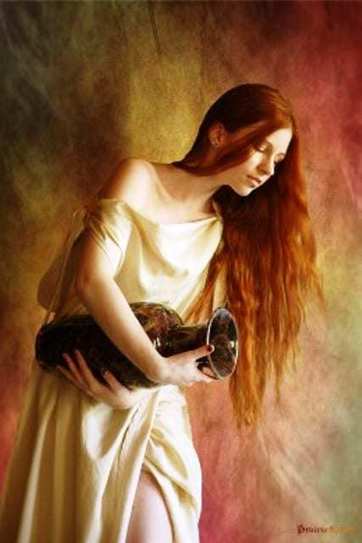
Image Source
The first couple of weeks of lock down, when I first started teaching online from home, all my dreams were work anxiety dreams of the typical sort, like those I have at the beginning of every school year. Those were often variations of dreams I had when I was a school student.
The last 9 weeks of lock down have been different. My dreams are complex, thick, dark, mysterious. They seem pregnant with meaning, almost prophetic. I've read some articles online that this is a growing phenomenon.
Here's an example from early this morning:
I am out in downtown somewhere, perhaps traveling, perhaps in my home city, but I can't tell. I'm trying to get back to some place which is either a travel agent's or a shop of some sort. I know the proprietor is a woman and in the dream I knew her name but I can't remember it now.
As I'm walking home the roads are dark and decrepit, almost as if there were a fire, earthquake, or maybe a war. Walls are down, streets are busted up, pipes hang out. The streets are narrow and there are small row homes around me. Then I'm slowly driven to the left and off my intended path by rising flood waters. I have to carefully step from block to block and crumbling walls sticking above the flood to avoid getting swept away as the current gets faster. I end up at a highway and the northbound lanes heading my way are flooded and cars are swirling in the water, but I manage somehow to get across to the southbound lanes. I am moving between the cars which are moving slowly and are packed in. Somehow I get a taxi, the driver of which rather painfully finds a way to back and forth his vehicle into the other direction when I tell him where I'm going.
We are driving around the neighborhood I'd just been walking in before the flood. There is rain, water, dripping, sloshing and splashing all about. I'm confounded that the driver does not know where he's taking me, as the destination is well-known and famous. Curiously, the anger I feel is not internal to me but is being shouted by Tom Cruise's voice outside of the vehicle behind my left ear. He is screaming about how it's unbelievable nobody can ever find this place because (woman's name) and her business are well-known.
Suddenly we are in the parking lot of a strip-mall, but the parking lot BEHIND the strip mall, not the front lot where the entrances are. This is my destination, but the taxi took me to the rear. The driver turns to me and says "If you knock on the door, she will let you in." I nod and while gathering my belongings to get out of the taxi some drunk young men are climbing in. They are stepping on my belongings which have spilled out in the taxi and onto the pavement, and include shoes and bags. I'm trying to pull everything out without conflict but I think I might have to fight these men. I think there were three or four but it's hard to remember. Then I wake.
Context
I'd been reading a psychoanalytic manual about the ongoing psychological primacy of Greek myths, heroes, and gods yesterday, and in particular about the Anima and challenges faced by Perseus with the feminine, and how the feminine eventually derails Perseus because of a lack of caution and what that story portends for those who encounter the Anima unprepared. I woke at 2 am, and unable to sleep started listening to a YouTube recording of a lecture about neoPlatonist philosophy and its mandates for developing self-control and the true purpose of religion. I recall the line "at a certain point of life the soul requires one to stop seeking things that are harmful to Self and others, and one must learn to sit quietly and develop self-control in order to..." After about an hour of this lecture I drifted into sleep, but the earbuds were still in my ears and the lecture was still playing. Later the earbuds fell out and I was awakened by a large insect buzzing by me and banging into a wall in the darkness, and then I fell asleep again before having the above dream, which was dripping with Anima and religious and Quest symbolism.
Just moments ago my wife saw the insect fly out from behind the TV--it is a huge fly of some sort, perhaps 2 inches long. I was unable to catch it and it disappeared.
Tuesday, May 19, 2020
Book #20 of 2020: The Unsettled Dust by Robert Aickman
How have I not read Mr. Aickman before? Perhaps I have, when I used to chug down enormous volumes of collected ghost or horror fiction anthologies as a teen. He must have been in one of those omnibus volumes featuring Machen, Poe, Lord Dunsany, and M.R. James...
The quality of the writing is superb. The characters are deftly and subtly realized, and the settings painted with an astute attention to detail. Aickman understood that horror and occult fiction work best when everything is as real and regular and normal as possible, until that moment when it isn't. He also understood that the moment when things go askew should be quiet and unsettling in startlingly insignificant ways. The creep of his fictions develops slowly over a few dozen pages until an absolutely delicious effect is achieved. Often the climax is as much a puzzle as a fright, a bewildering haunt or murky resolution. Where Lovecraft would have the narrator swoon into forgetfulness upon witnessing some cosmic monster, Aickman has the narrator return unsettled to the office on the morning train.
These tales rank with the best--and by the best of course I mean M.R. James and Henry James, whose ghost fictions are of an undeniable literary craftsmanship. I'd throw Shirley Jackson in there as well, but her stories build subtly and then tend toward a garish or nightmarish or wickedly funny reveal. Aickman and the two Jameses are more subtle. Aickmans's narrators are reminiscent of M.R. James' artsy intellectuals and his settings are the same country villages and dark moors, but with modern John Cheever twists and turns. I loved this volume, and will read more!
Book #19 of 2020: Labyrinth by Kate Mosse
I was on a reading roll all year. What else is there to do as a global pandemic shuts everything and forces one to work from home and to stay at home 99% of the time?
On the internets I encountered a list of "Top 10 Novels Recommended by Medievalists." I'd read a few historical fictions of high quality so far in 2020, so I took the plunge with the Number 1-Rated book on the list, Labyrinth. It sounded fine, having Chartres and Languedoc as settings, and concerning in some ways the secret of the Cathars. Why not, I thought? It was recommended for its scholarship and intricate plotting, after all.
This book is a giant turd. It is the worst trash I've read since that dreadful The Girl Who Did A Bunch of Ludicrous and Impossible Stuff series. Every character is knocked unconscious at the end of a chapter and wakes up befuddled at the beginning of the next. Every character is replicated by a doppleganger who lives in a different century. The concurrent story lines in the 13th and 21st centuries are both thin and uninteresting. The secret of the Cathars is dull and silly tripe stolen third hand from Holy Blood, Holy Grail and thence via that garbage churner Dan Brown.
There are highlights in this novel. The sex scenes are quite amusing, with "she could feel his desire for her pressing firmly against her back," or "she moaned as he slid deeply into her." A woman with a PhD goes to a public library for research about a particular labyrinth and types the imaginative keyword 'labyrinth' into Google, then prints 72 pages of crap that you could find in a child's book, marveling at her discoveries. All of the much-lauded "scholarship" in the book is delivered by one character to another in a tedious summary of Crusader history that Wikipedia would pull down in a day.
I honestly don't know why I finished it. It took 2 weeks to read.
Avoid at all costs, unless you like Dan Brown, which billions of people did. I will studiously avoid the rest of the Languedoc Trilogy and its secrets of the Cathars. Re-read Nancy Drew novels instead, which have stronger characterization, better plotting, and less pretense. This is like a long episode of Magnum, P.I. where Higgins dreamed the entire thing after digging up the Tiki doll from The Brady Bunch.
Subscribe to:
Posts (Atom)