Showing posts with label films. Show all posts

Monday, July 30, 2007

RIP


Working through Bergman's catalog on Netflix has been one of my great pleasures over the past few years. A couple dozen films not in Netflix's warehouse remain, and I look forward to tracking them down.

Ingmar has rejoined Sven Nyquist on the other side.

Here is Bergman in 2004:

"I don't watch my own films very often. I become so jittery and ready to cry ... and miserable. I think it's awful."


I too often become jittery and ready to cry and miserable watching his films. Bergman often challenged us painfully with shocking honesty and unbearably intense intimacy. I thank him. Perhaps the greatest artist in cinema history? If not, definitely a premiere member of a tiny elite.

Monday, July 09, 2007

Netflix


I read a review recently of books about reviewing books. Its subject, I suppose, and its purpose, was to criticize the criticism of critics criticizing criticism. The author of said article belittled the standard practice of using this formula in reviews:

A is like B meets C, as in:

Donnie Darko is like The World According to Garp meets Edward Scissorhands.

Belittlable or not, I'll continue using this formula, because for an intellectually curious and fundamentally lazy person like myself, it helps express what I want to say about a film or book quickly. In fact, I'll say that Donnie Darko is like The World According to Garp meets Edward Scissorhands with a bit of Evil Dead thrown in (A is like B meets C plus D). Not because Donnie Darko has any technical or thematic association with Sam Raimi's brutally original horror flick*, but because some characters in Donnie Darko actually go to see Evil Dead, and there are literally bits of Evil Dead seen in the film.

I shan't recommend Donnie Darko. Mostly my response was "whatever," though occasionally it improved to "eh." Patrick Swayze's role was a surprise at least.

*There is, of course, a dead character in Donnie Darko who is evil. Or whose behavior seems to be evil. I'm sorry if that's a spoiler. Whatever.

Saturday, July 07, 2007

Netflix


I really enjoyed this. I think Dick's novel--inspired by the amplified paranoia surrounding Nixon's late phase--is perfectly timed for today's descent into Bush's amplified mimicry of Nixon's late phase paranoia. And Linklater's film does Dick's book justice.

Of course no actors playing burnout paranoid drug abusers could be more unbelievable in the role than Robert Downey, Jr., Winona Ryder, Woody Harrelson, and Keanu Reeves. Am I being sarcastic? Who knows any more, to paraphrase an old Simpsons episode.

The animation is beautiful and jarring. I'd of course not know from experience, but would imagine that looking at oneself in the mirror blasted on mescalin or psilocybin might be similar to looking at the shimmering features of these actors given whatever special technical treatment they received in order to jazz up the imagery. And Winona's cartoon boobs are nice.

Yes, Keanu does say "Woah" at one point. His fans shan't be disappointed in that regard.

Thursday, July 05, 2007

Sicko

Moore drops that increasingly annoying confrontational "gotcha" gimmick* and the result is his most effective film to date. His trademark cornball folksy exasperation works well as he tells the stories of a few people without health insurance before getting quickly to the true subject of Sicko: people with full coverage whose insurance companies fucked them. Sometimes to death.

Sicko is a grim catalogue of pointless suffering and waste. Many in the crowded theater were reduced to loud and continual blubbering. On July 4th at The Charles the outrage and disgust were palpable. I hope everyone who sees Sicko carries that outrage into action. It will take hard work and activism for the US to end the barbaric negligence of its citizens' health by rich amoral corporations and sycophantic politicians. Just as the criminal actions of HMOs and insurers become unbearable in the film, Moore pauses to ask "What is wrong with us?" It's a powerful moment.

Sicko isn't perfect. Moore meanders a bit too much, lingering in France and Cuba for too long, getting a bit off topic in the former and a bit maudlin in the latter. I'm a huge fan of French Republican idealism but Moore ignores the heavy cost of its nanny state in his glowing portrait.**It's also likely that the Cuba sequences were stage-managed to some degree by government officials eager for good PR. But considering the cloud of insurance company obfuscation Americans have breathed for years, Moore's approach is hardly unwarranted. At a time when the Democratic Party has removed universal health care from its platform the debate Sicko hopefully inspires is badly needed. See it before you pay your next premium.

*With one glaring exception, which I shan't spoil.
**At least the French make providing health care to everyone a priority; financing it is a secondary consideration, and the idea of prioritizing profits over health is regarded as obscene.

[Image courtesy VCReporter]

Friday, June 29, 2007

Netflix


Ian Holm uses an uncanny likeness to the Quaker Oats Dude to mesmerize 18th-century lunatics. Pancaked babes in powdered wigs and bustles provide the King's guardsmen discreet handjobs in ornately decorated galleries so that Helen Mirren can sneak into an asylum. The King's water is blue but his stools are copious and solid. God save the King's stools.

Tuesday, June 26, 2007

Netflix


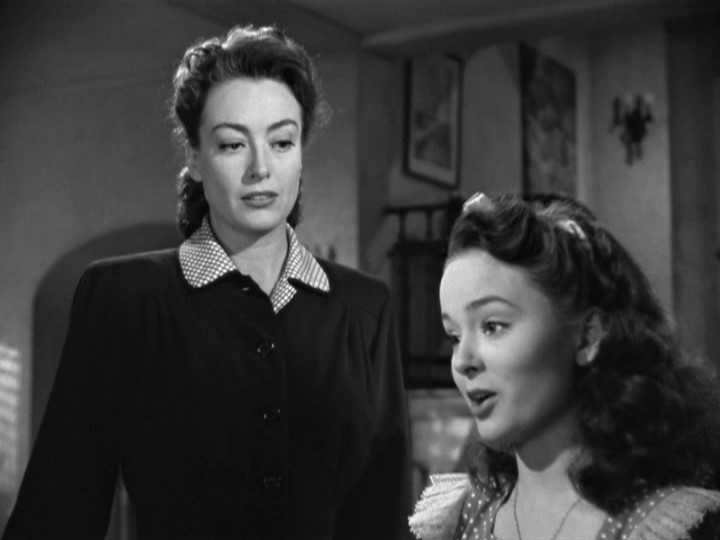
Whatever your feelings about its noir plot, Mildred Pierce is a beautiful film. The transfer is spectacular, and every frame is crisp and clear. The opening sequence is wonderfully shot--no pun intended. The lighting and set design and performances are great too. Joan Crawford moves through the story like an iceburg through the North Atlantic.

The story? Eh. I wasn't much moved by Mildred's battle to provide for her awful daughter Veda. She should have noticed sooner that Veda was an amoral brat and kicked her to the curb. Of course Joan Crawford treating a daughter badly has been done in another film. Veda would likely have benefited from a wire hanger whooping.


[image courtesy DVDBeaver]

Saturday, June 16, 2007

Netflix


I enjoyed Peter Weir's disturbing and atmospheric masterpiece Picnic at Hanging Rock. It was a troubling and ambiguous film, almost like a collaboration between David Lynch and Merchant Ivory.

The Last Wave is no masterpiece, but I liked it a great deal. This one is more a combination of George Romero's Season of the Witch and Yeelen.

The late Richard Chamberlain plays a corporate barrister named David who takes on pro bono work in defense of a group of Aborigines charged with the murder of one of their own. The crime makes little sense because the victim drowned in about a cup of fresh water. As he works on the case, David's dreams become strangely prophetic. Meanwhile, a series of Biblical plagues--hail, clear sky thunderstorms, falling frogs and petroleum drizzle--plague Sydney. David finds himself battling an Aboriginal sorcerer in a contest the result of which could immanetize the escaton. But which side is David fighting for? Do his labors aid those who wish to prevent apocalypse, or those who wish it to succeed?

Strange to note that this film popped into the Amazon recommendation software just as I began reading about shamanism and myth again after a long hiatus.

Wednesday, June 13, 2007

Netflix


Loved it. One of the best films of its--or any--kind. Scofield as Thomas More is perfect in every way. John Hurt's Richard Rich is fantastically twitchy, and Leo McKern absolutely kills as Cromwell.

Of course most people know the story going in, but nevertheless More's inspiring and costly folly is heart-breaking to watch. Like the Duke of Norfolk in the film, one wants to reach through the screen and choke More, shouting "just sign the damned oath already! Spare yourself!"

Fred Zinneman's direction isn't particularly interesting or artful, but the costumes and sets are magnificent, and the absence of an "activist judge" behind the camera allows the viewer to concentrate on what is being said, and how it is being said, which is what matters here. Directorial innovation and stylistic intrusions can distract rather than illuminate in certain sorts of films, and A Man For All Seasons benefits from Zinneman's cool absence. I call it the "Merchant Ivory School of Filmmaking," though this of course predates Merchant Ivory.

I enjoyed it even more than The Lion in Winter with its much more adventurous actors. And I adored The Lion in Winter.

Wednesday, June 06, 2007

Netflix


I thought Clint Eastwood's Flags of Our Fathers was a spot-on critique of propaganda and media manipulation during wartime. I had problems with the way the narrative jumped around; the flash-forwards and -backs and -betwixts were clumsy and jarring and exhausting, but nevertheless it was a brave and timely film, and demonstrated that Eastwood the auteur is not afraid to use his art to teach us something about where our country is right now. I got the sense that Flags of Our Fathers was an excellent film trapped inside a good movie.

Letters From Iwo Jima is an almost flawless companion piece. Here the primary themes--again brave and timely--are valor and the senseless waste of human beings. Like any resource, valor can be misappropriated and spent pointlessly. Valor can be used to hush criticism of foolhardy strategies and policies. Eastwood focuses on the Japanese soldiers who wait for an American invasion of Iwo Jima. The soldiers write letters home to their families. Everyone knows their mission is pointless, from the Emperor on down. Everyone understands that America's victory is inevitable. And yet the soldiers are asked to fight to the death, and many willingly and fanatically do so, in a catastrophic waste of life and resources.

Eastwood's decision to make such a film now is certainly no accident. This is no 'Hollywood liberal' cinematically attacking the Iraq debacle from a peacenik perspective. This is a sophisticated film-maker using the past in an effort to make us think about what's going on right now. You should see it today.

Strange to think that this is the same guy who starred in Every Which Way But Loose.

Friday, May 25, 2007

netflix


Apocalypto
proves that Mel Gibson has more in common with Leni Riefenstahl than anti-Semitism and a penchant for Fascism. Gibson also shares her keen eye for capturing the athletic human form in aesthetically pleasing and sumptuous ways. I found the film at once shockingly beautiful and troubling, and enjoyed it more than The Departed, The Queen, or The Last King of Scotland.

Gibson may be a raving lunatic at times, but whatever demons he's wrestling don't prevent him making interesting films. Upon its release, A.O. Scott wrote a review in the New York Times which was backhandedly enthusiastic. Scott simultaneously praised Apocalypto and damned it as more interesting than good. I'd agree with that assessment, but found Apocalypto very interesting--definitely interesting enough to overcome its plot shortcomings. I think Scott complained about the pornographic violence, while admitting the film was technically superior. It's a stirring evocation of a lost culture, an imaginative and brutal achievement, and was perhaps intended as a visionary plea for ecological sense and against imperial hubris.

Would I call Gibson an artist? I don't know. He's tackling vital current issues* in this film, which is his best directorial effort--much better in fact than the oft-lauded Braveheart. The story? Mostly forgettable, but I was enthralled throughout. As a recreation of a lost civilization it's on a par with another underappreciated masterwork, Fellini's Satyricon. The sequence in the Mayan city is brilliant. The Mayan religion at last has its own Sign of the Cross. And no, it is no exaggeration to compare this film to a Cecil B. DeMille classic.

Good Lord, perhaps I am calling Gibson an artist.

*Gibson opens with a quote by Will Durant, something to the effect that internal decay defeats an empire before external threats can. Is this the standard right-wing twaddle about moral decadence leading to God's wrath? Gibson's film does imply the Mayans had it coming when the Spaniards arrived to wipe them out. Their naughty and brutally repressive political and religious classes are wonderfully portrayed in the film. I think, intentionally or not, that Apocalypto is richer and more subtle than one would expect, knowing what we know about Mel's personal belief system.

Tuesday, May 22, 2007

Netflix


A good one. Beatty nails this role with the appropriate warmth and intensity, and even shows off an exquisite comic timing. Diane Keaton is also excellent in what amounts to the most substantial role I've seen her play. Jack Nicholson is superb as the brutal cynic Eugene O'Neill, and Paul Sorvino, Gene Hackman, Jerzy Kosinski, and Maureen Stapleton round out a great cast.

Reds is not only about John Reed and the American socialist/communist Left leading up to and following the Bolshevik takeover in Russia--it is also a powerful romantic film. What Louise Bryant went through to try and rescue her husband from a Finnish jail is truly harrowing.

The entire history of America's response to the Bolsheviks is here: the Palmer Raids, the witch hunt trials and Congressional investigations, the jailing of dissidents, the little-known active military campaign against Russia after Lenin and his cohorts siezed power. At 3 hours plus the film is not wearying, which is an achievement in itself. Beatty impresses as writer/director; this is an enormous epic, and it stands the test of time.

Mixed into the narrative are documentary snippets featuring reminiscences by veteran reds and fellow travelers. These old souls, dessicated by an idealism gone monstrously wrong, remain largely unrepentant, and add an interesting historical backdrop. Henry Miller talks about fucking then and fucking now. Now, of course, being 26 years ago.

Thursday, May 03, 2007

Netflix


The DVD wouldn't play on my old Panasonic, so we had to borrow an LCD projector from Cha's office and watch it using a laptop. That was fun, like a drive-in movie in the house.

Forest Whitaker kicks ass. Loved him in Bird, Smoke, Platoon, and most particularly in Ghost Dog. His performance in that craptastic schlock The Crying Game was heart-breaking, and remains the only memorable thing about that movie.

This is not your cuddly intellectual Forest, however. In playing Idi Amin he's tapped himself into some deep-seated vein of pure malevolence, made himself into an entirely different creature. Whitaker's Amin is charming and witty one second, and coolly oversees torture and massacres the next. Childish vulnerability, obsequiousness, monstrous apathy, paranoia--this bundle of sociopathologies is a smorgasbord for any actor, and Whitaker is up to the task. A great performance.

The movie, however, is only so-so. I didn't much like the story, wherein some Ewan McGregor clone recently awarded his medical degree in Scotland runs off to Uganda to "make a difference." Apparently "make a difference" means shag the locals and drink. I suppose this is meant as a commentary on post-colonial British/English/European meddling in African affairs, but it's clumsily handled. I disliked entirely the character Dr. Garrigan, whose naivite is beyond profound. Garrigan is rightly sickened by the English and their scheming: they help Amin to power because perhaps they can use him to continue exploiting Africa, and then they want to get rid of Amin because he's uncontrollable. But if anyone deserved to be got rid of, it was this butcher. By the end of the movie Garrigan--who has aided and abetted Uganda's dictator--is awakening to Amin's true nature, and one is supposed to sympathize with his plight. Um, no. He should be hung for crimes against humanity. [Spoiler alert: We get some satisfaction along those lines.]

The Last King of Scotland is basically a thriller with a political/espionage backdrop, wherein a young idealist is perverted by power and wealth into enabling a genocidal maniac. Perhaps the novel is better? Maybe I'll find out some day.

The director Kevin Macdonald made the documentary Touching the Void, which I enjoyed a great deal.


Tuesday, May 01, 2007

Netflix


In June of 1994 Cha and I were on a bus from Heathrow Airport into London on our honeymoon. On a long flat highway amongst green pastures we cruised along, the driver occasionally pointing things out and discussing them. Then an absurd fairy tail automobile appeared coming toward us in the right lane, a confection of glass, wood, and polished metal. Seated inside in an elevated rear compartment was a hat the size of an extra-large New York pie, drooped at a saucy angle. The Princess of Wales without escort, without fanfare. She passed within two meters of me, her seat somehow as high as mine in that carriage of hers. The bus driver murmured something about the Princess of Wales not bothering to wave at us after he waved at her. "At the least her driver could acknowledge one of his own," he said.

I never much bought into the fascination with the monarchy, but had friends who went NUTS over the Diana/Charles wedding and subsequent scandals. All of that seems rather quaint now, given the tragedies to follow. It's also hard to think of Diana's death without the maudlin grotesquerie of Elton John's "Goodbye England's Rose," which thousands of ghouls lined up to purchase at the bookshop.

Helen Mirren rules, and I'm glad she finally got recognition. She is a one of my very favorite actors, and nails Elizabeth in this charming soap opera. Almost as good is Michael Sheen as Tony Blair. Sheen perfectly captures the unctuous Labour PM with uncanny political instincts. Again, it's hard to remember how energetic and fresh Blair seemed when he took over English governance from the wintry John Major. Now he's just another hack, a Bush toady, and he's gone in a few weeks.

The Queen is slight, and could easily have wandered off into made-for-TV-movie territory. The actors give it substance, however. I recommend it.

Thursday, April 26, 2007

Netflix


I've only watched The Great Ecstacy of the Sculptor Steiner so far. Took me right back to ABC's Wide World of Sports and Jim McCay's "the agony of defeat," repeated weekly over footage of a ski-jumper crashing off the end of the ramp. Jim McCay lives in Parkton, near where I went to high school. I used to help him load his groceries when I worked at Graul's Superthrift grocery.

But back to Steiner and Herzog. Steiner effortlessly breaks ramp records wherever he jumps, and despite passing the safety limit and regularly falling he keeps doing so. Herzog ties Steiner's urge to fly to his wood carvings and the pent-up energies the sculptor sees stored within uncut chunks of branch and stump. There is a lot of beautiful footage of athletes soaring in slow-mo, and there are several disturbing crashes. Steiner in flight gapes with his mouth wide open in an obvious state of transcendence. What mysterious force drives people to launch themselves more than 150 meters down a hill? Steiner recites a story about a raven he raised as a child which was eventually tormented by other ravens, but I suspect this might be a Herzog script inserted into the documentary--he's been known to do that. Perhaps not. It seemed too 'perfect' somehow, the way it mirrors Steiner's torments as undisputed master of his craft.

I look forward to the short documentary about my home state of Pennsylvania.

Harper's had an interesting article about Herzog a few months back that I forgot to mention here. I like the way it closes:

...I told Herzog how much I admired him, and how thankful I was that he had agreed to see me. Herzog seemed neither surprised nor pleased by my effulgence. Instead he looked at me for a disarmingly long time--so long, in fact, I began to feel like a character in a Werner Herzog film. Finally, he said: "There is a dormant brother inside of you, and I awaken him, I make him speak, and you are not alone anymore." We shook hands and he was gone. I walked outside, through a curtain of Los Angeles sunshine, to the street's edge, where I stood for a long time, ecstatic and not quite alone.


Tom Bissell, December 2006

Monday, April 16, 2007

Netflix


I've not seen a better film about childhood, about the great magical density of the world as seen through the mind of a young child. The Spirit of the Beehive explores the way "growing up" entails limiting our consciousness. The world makes absolutely no sense at all until we learn to ignore much of it and focus narrowly on the banal. Each of us gains functionality in this mini-Fall from Paradise and into the mundane, but the loss is incalculable.

In Fascist Spain, Young Ana lives in an enormous manse with her distant parents. Her mother writes long and passionate letters to an absent lover. Her father takes care of bees and writes in his journal. Otherwise Ana and her older sister are left to their own devices to explore a desiccated countryside and decrepit village where everyone busily goes about their assigned roles.

The children see Frankenstein at a movie house in town. Ana asks her sister why the monster killed the little girl, and why the villagers killed the monster. Her sister says that the monster did not die, and that if she knows how to call him its spirit will come to her. Ana invokes the spirit of Frankenstein's monster with surprising results.

The father writes about perturbances in his beehive; Frankenstein's creature is such a perturbance to the villagers in the film, and so is a wounded resistance fighter Ana befriends. Both meet similar fates. There is an implied critique of Fascism mixed in with the magical reality of Ana's world. Ana's imaginativeness and her individuality make her a potential perturbance as well.

There is little dialogue in The Spirit of the Beehive, which works subtly and powerfully on psychological and political levels. Mysterious moments of eerie resonance move the plot forward to a strange climax.* I watched it bombed out of my gourd and thought it was magnificent. I'll wait a few months and watch it again to double-check, but this may be one of the greatest films I've seen. Definitely an influence on del Toro's Pan's Labyrinth. Ana Torrent's performance is hands-down the greatest child's performance I've seen.

*I tried to come up with an example of what I'm talking about here--perhaps Stan Brakhage's Dog Star Man? Or Olivier Messiaen's grand symphonic piece Eclairs sur l'au dela (Illuminations of the Beyond) with its curious nebulous chords pulling the listener along...

Tuesday, April 10, 2007

Netflix


Set in Spain as Franco prepares to install his fascist regime in 1939, Guillermo del Toro's The Devil's Backbone features a haunted school for orphaned boys. Young Carlos is the son of a fallen Republican fighter and is left at the school by his tutor. Immediately there is conflict with a bully and a savage caretaker named Jacinto. There is also a confrontation with a mysterious spirit called "the one who sighs." In the courtyard at the school is an unexploded bomb. Del Toro cleverly uses this as a visual symbol, as the opening and closing narration of the film asks the question "What is a ghost?" Like unexploded ordinance, a ghost is arrested between its purpose and dissolution, an unsatiated and dangerous emblem.

The haunting and its resolution are cleverly achieved, and the film works on other levels as well, with a conspiracy to rob the school of its gold, the support by the school of rebels in the hills, and the sometimes nasty struggles amongst the boys rounding out the storyline. There's a one-legged woman running the school, a hot young teacher involved with the caretaker, and a kindly old doctor who spouts poetry to boot. What more can you ask?

Part Ringu, part Lord of the Flies, and entirely delicious.

Wednesday, April 04, 2007

Netflix


A classic dystopian vision of the future. No human baby has been born in 18 years as a plague of infertility sweeps the globe. In its wake civilization has collapsed everywhere except jolly old England, where the government has assumed extraordinary powers to fight terrorism and illegal immigration. Clive Owen plays a functionary of some sort who barely notices the cages of starving 'fugees at each Tube stop on his way to work every day. Then his life is turned upside down by a terrorist organization, launching the action.

Not much suspension of disbelief is required to fall into this future, alas. It's easily imaginable, and the violence, squalor, and despair in the film are already a reality for much of the globe. I was swept along by the film, by its performances and its grit. A radio DJ at one point announces a song by saying "This one is from 2003, those happy days when people refused to accept that the future was here." The future is here now--REPENT, and buy land in Alaska if you can afford it.

In the extras is an interesting documentary featuring Slavoj Zizek, Naomi Klein, James Lovelock, John Gray and other intellectual heavy-weights who respond to the film's portrayal of the 21st century. Naomi Klein mentions the appearance of fortified 'green pockets' around the globe where wealthy people live in comfort and safety apart from the seething masses of desperate humanity. James Lovelock thinks a few hundred million survivors will gather at the eventually tropical North Pole and will slowly rebuild civilization. Slavoj Zizek thinks we all know what's coming but are paralyzed into inaction by the weight of his enormous intellect. Or something.

Good, bleak cinema.